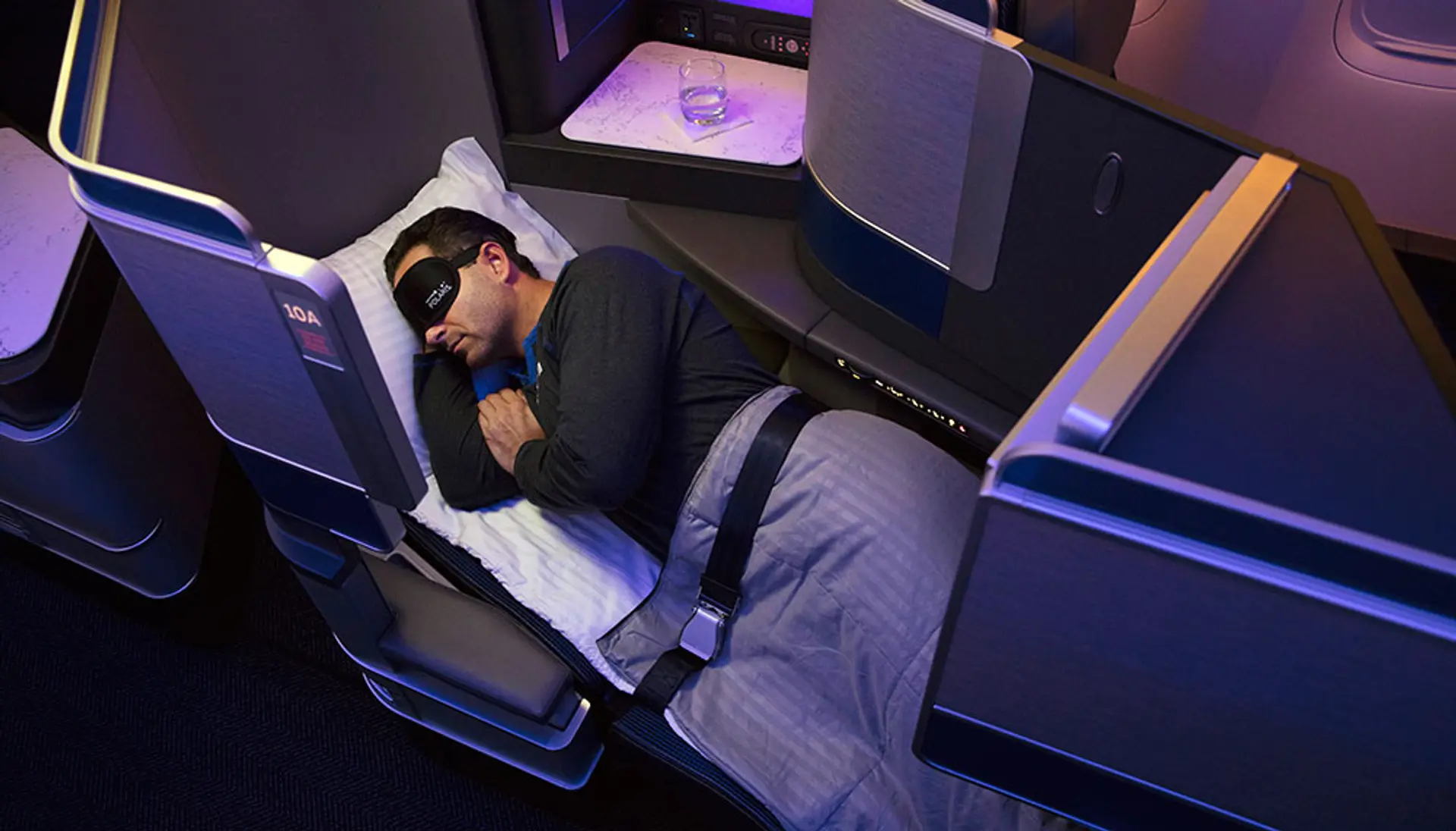

The history of flights from the UK to Australia began in 1935 with a journey from London that took around 12 days and involved dozens of stops, overnight stays and even a train ride across Europe; today, the same trip can be flown from London to Perth in about 17 hours, with Qantas preparing to push the route further with nonstop Sydney-London flights.
For affluent travellers interested in premium long-haul travel, that near-90-year shift explains how one of the world’s longest journeys changed from an arduous, expensive expedition into a practical luxury air link. The story is closely tied to Qantas and the Kangaroo Route, and it takes in the early multi-stop services, the flying boat era, post-war improvements, the arrival of jet aircraft and the Boeing 747, modern nonstop milestones, and what comes next.
It is an extraordinary example of how far commercial aviation has come, and why today’s business and first class journeys between Britain and Australia feel so different from the ones that came before.
And the next chapter could be the most remarkable yet.

The first flights from the UK to Australia
The first regular passenger service between Britain and Australia began on 13 April 1935, when Imperial Airways – a predecessor of today's British Airways – and Qantas Empire Airways began operating a London–Brisbane service. The first flight from England to Australia took place in 1919, long before the first regular service. The first passengers completing the journey departed London on 20 April. (British Airways)
This was a very different form of air travel from what we know today.
The route stretched approximately 20,500km (12,750 miles) and took around 12 days. Depending on the exact routing, passengers made dozens of stops along the way, travelling through Europe, the Middle East, India, Southeast Asia and eventually Australia. (British Airways)
There was even a train journey involved. Passengers travelling from London initially flew to Paris before taking a train across France to Brindisi in Italy, where they continued the journey by air.
The service was jointly operated, with Imperial Airways handling much of the journey between Britain and Singapore, while Qantas had begun operating passenger flights to Singapore in 1935 before continuing onward to Australia.
The Singapore–Australia leg was flown by Qantas using the De Havilland DH.86, a four-engine biplane that could carry only a handful of passengers.
It was hardly a luxury airline experience by today's standards. There was no dedicated cabin crew on the early Qantas flights, and the co-pilot could find himself handing out sandwiches to passengers.
Yet the service represented a revolution for travellers heading to Australia. Before regular air travel, the journey from Britain meant a six-week sea voyage.

The flying boat era and flying boats
The route improved significantly during the late 1930s.
In 1938, Imperial Airways introduced flying-boat services between Southampton and Australia, using aircraft such as the Short C Class and later the Short Empire flying boats. The aircraft were designed to offer a relatively luxurious experience, with spacious cabins, dining facilities, a promenade deck and dedicated smoking areas. (British Airways)
Compared with the cramped aircraft of the early 1930s, these flying boats were remarkably sophisticated.
Passengers could sit in comfortable saloons while enjoying food, meals and drinks as the aircraft crossed the Mediterranean, Middle East and Indian Ocean.
The journey was still painfully slow by modern standards, however. By the late 1930s, improvements had brought the journey down to roughly 10 days, but it remained an expedition rather than a simple flight.
The aircraft also had to deal with conditions that modern passengers rarely think about. Flying through tropical weather at relatively low altitudes could mean severe turbulence, while pilots had nowhere near the sophisticated weather radar and navigation systems available today.
Then came the Second World War.

The post-war breakthrough
The war brought enormous changes to aviation technology, much of which would eventually find its way into civilian aircraft.
On 31 May 1945, BOAC – British Overseas Airways Corporation, another predecessor of British Airways – and Qantas launched a joint service between Britain and Australia. The route cut the journey to around 63 hours, a dramatic improvement over the pre-war service, and by 1947 Qantas had reduced the journey time further to 58 hours. (British Airways)
But the real milestone came two years later.

The birth of the Kangaroo Route and Qantas Empire Airways
On 1 December 1947, Qantas launched its first service on the Sydney–London route using the Lockheed Constellation.
The flight carried 29 passengers and 11 crew, with departure from Sydney before calling at airport stops in Darwin, Singapore, Calcutta, Karachi, Cairo and Tripoli on the way to London. The total flight time was almost four days, or roughly 94 hours. (Qantas)
This became the famous Kangaroo Route, a name officially coined by Qantas in 1944 that would remain associated with its services between Australia and Britain for generations.
The route was still an endurance test, but the Lockheed Constellation represented a huge step forward. Its pressurised cabin, greater range and four-engine design made long-distance travel considerably more practical.
For passengers, the journey was still lengthy, but the days of spending nearly two weeks travelling across the globe were beginning to disappear.
And aviation was about to get much faster.

The Jet Age
The arrival of the jet engine transformed flights between Britain and Australia.
Qantas entered the jet age in 1959, taking delivery of the Boeing 707 and becoming one of the first airlines outside the United States to operate the aircraft. (Qantas)
Suddenly, aircraft could fly at much greater speed as well as considerably higher altitude than the piston-powered airliners that had dominated the previous era.
By the early 1960s, the London–Sydney journey had been reduced to roughly 34–38 hours, depending on the aircraft and routing. Rome also became one of the better-known stopover points on later Kangaroo Route routings.
The number of stops also began to fall as aircraft became more powerful and efficient.
By 1969, Qantas was operating multiple weekly Kangaroo Route services between Sydney and London, with journeys taking roughly 29–32 hours and involving around five or six stops.
The progress was remarkable: in little more than 30 years, a journey that had taken nearly two weeks had been reduced to little more than a day.

The Boeing 747 changes everything
The next major revolution arrived with the Boeing 747.
Qantas introduced the aircraft in 1971, and the jumbo jet immediately changed the economics of long-distance travel. The aircraft could carry hundreds of passengers and had the range to dramatically reduce the number of stops required to cross continents on the Kangaroo Route. (Qantas)
Instead of the numerous stops required by earlier aircraft, Qantas' 747 services could generally complete the journey with just two major stops, commonly through Singapore and Bahrain.
Flight times fell to around 26 hours, and later Boeing 747 developments would eventually cut the trip to around 20 hours by 1989.
The aircraft was also significantly more spacious than its predecessors, with Qantas' upper-deck lounge becoming one of the most famous features of the jumbo jet.
For travellers heading between Britain and Australia, the world suddenly felt much smaller.

The 1989 nonstop record
By the late 1980s, aircraft technology had advanced enough to make something previously considered almost impossible achievable: flying from Britain to Australia without stopping.
In 1989, Qantas took delivery of its first Boeing 747-400 plane.
On 18 August 1989, one of the aircraft, registered VH-OJA and named City of Canberra, made aviation history by flying nonstop from London to Sydney.
The flight took just over 20 hours and covered approximately 17,000km.
There was an important catch, however.
This was a record-breaking delivery flight, not a regular commercial passenger service. The aircraft was specially configured and carried a limited number of people on board rather than a normal paying passenger load. Its purpose was to show that airlines might one day fly direct on the route.
Nevertheless, it demonstrated that a commercial jet could physically make the journey nonstop.
Qantas had shown that the technology existed. The question was whether airlines could make such a service commercially viable.

Why didn't nonstop London–Sydney flights begin immediately?
This is where the economics of long-haul aviation become important.
Flying nonstop over such a huge distance requires enormous amounts of fuel. Carrying more fuel makes an aircraft heavier, which in turn requires even more fuel.
There is also the question of passengers.
A long-haul aircraft needs to carry enough people and cargo to make the flight financially worthwhile, which is why the economics of international travel on ultra-long-haul routes are so demanding. A route that technically can be flown nonstop is not necessarily a route that makes economic sense.
As a result, regular passenger services between the UK and Australia's east coast continued to require a stop.
For decades, travellers became accustomed to changing planes or refuelling somewhere in Asia or the Middle East, and east-coast passengers still relied on a one-stop service rather than a true nonstop operation.

The 2018 breakthrough: Perth to London nonstop
It was not Sydney that became the first Australian city to receive a regular nonstop flight to Britain.
It was Perth, in Western Australia, the first Australian city to gain that regular nonstop UK link.
On 24 March 2018, Qantas launched its first regular nonstop service between Perth and London Heathrow using the Boeing 787-9 Dreamliner. (Qantas)
The route covers approximately 14,498km and takes around 17 hours, depending on winds and other conditions. (Qantas) The same generation of Boeing 787 aircraft now also enables some direct flights of about 15 hours on ultra-long-haul routes.
It was a remarkable achievement.
The Boeing 787 was not simply chosen because it could fly the distance. Its fuel efficiency made the economics of such a route much more attractive than they would have been with older aircraft.
The Dreamliner also offered a number of features specifically designed to make ultra-long flights more comfortable, including improved cabin pressure, humidity and lighting.
For the first time, passengers could travel directly from continental Australia to Britain without changing aircraft.

The journey today
The Perth–London route changed expectations about what was possible in commercial aviation, with the journey now taking about 17 hours compared with a six-week sea voyage in the past.
Qantas' nonstop service has demonstrated that passengers are willing to spend around 17 hours on a single flight when it eliminates the inconvenience of a connection.
The airline continues to list London–Perth as a direct route, although flight operations can occasionally be adjusted because of airspace and operational considerations. In 2026, for example, Qantas temporarily routed some Perth–London flights via Singapore because of changes to flight paths in the Middle East. (Qantas) Carriers such as Singapore Airlines have also helped reshape expectations around ultra-long-haul travel.
The bigger prize, however, has always been Sydney.

The next chapter: Project Sunrise
Sydney is almost 2,000km further from London than Perth, making a nonstop service considerably more demanding.
Qantas' answer is Project Sunrise.
The airline has ordered specially configured Airbus A350-1000ULR aircraft capable of flying more than 16,000km nonstop. The aircraft will carry fewer passengers than a conventional A350, allowing Qantas to dedicate more of the aircraft's weight and capacity to the fuel and equipment required for these extreme distances, while using the special layout to improve comfort, especially in business class.
Qantas plans to launch nonstop Sydney–London flights in October 2027, followed by Sydney–New York services. (Qantas) Qantas Boeing aircraft, from the 707 to the 747 and later the Dreamliner, helped pave the way technologically before the Airbus A350 was chosen for Project Sunrise.
The journey is expected to take around 20 hours, depending on winds and routing.
That would mean that the journey which once took 12 days could eventually be completed in roughly 20 hours without a single stop.
It is difficult to think of a better illustration of aviation's progress.

From 12 days to 20 hours
The history of flights between the UK and Australia is essentially a history of the aviation industry's battle against distance.
In 1935, passengers embarking on the first London–Brisbane service faced a journey of around 12 days, with dozens of stops and multiple forms of transport on the Brisbane route.
By 1947, the Kangaroo Route had reduced the journey to around four days, linking Sydney, Melbourne and London through onward connections.
Qantas Empire Airways opened the early London–Brisbane route in partnership with Imperial Airways in 1935.
The jet age brought that down to roughly a day and a half.
The Boeing 747 reduced it further.
In 1989, Qantas proved that a Boeing 747 could fly nonstop from London to Sydney, although only as a special record-breaking departure.
Then, in 2018, the Boeing 787 made nonstop Australia–Europe travel a reality for ordinary paying passengers with the launch of Perth–London.
And now, with Project Sunrise, Qantas is preparing to push the boundaries once again.
The next time you settle into a 17-hour flight between Britain and Australia, spare a thought for the passengers of 1935.
They made the same journey.
The Southern Cross Route and later global expansions even connected into places such as Mexico City, showing how far Qantas' long-haul network evolved beyond the original UK–Australia corridor.
They just had to spend another 11 days getting there.