On an airplane, sleep is the ultimate luxury. Don’t you envy those people who can fall asleep at the drop of a hat?
Five minutes after take-off, their head leans back, eyelids drop, and they enter the land of slumber, not to return to life until the landing gear descends and arrival is imminent. All the while, you sit there with glazed eyes, a strain in your neck, barely getting a single wink, let alone forty.
In fact, drifting off in the skies—especially on an airplane—is oft-cited as the number one challenge when flying. Most people struggle to get a good night's sleep on an airplane, making it difficult to arrive refreshed and ready for their destination. In order to address this irritating conundrum, airlines are always looking for ways to improve their passengers’ sack time, with a number of sleep-friendly innovations now implemented in modern aircraft cabins.
Here, we take a look at the lengths airlines go to ensure you get a good night's sleep and why getting a good night's rest during air travel is so important.
1. Suites
If you really want a restful night's sleep at 30,000 feet, then Etihad’s The Residence is among the most luxurious sleeping experiences available in commercial aviation. The three-room luxury suite features a combined living and dining room, a bathroom with shower, and a bedroom with a 208cm (6ft 10) double bed. Prices for The Residence can run into several thousand pounds for a one-way journey, depending on route and demand, The Residence may well be one of the priciest sleeps you ever have, but you are sure to enjoy a good night's sleep in this exclusive and supremely comfortable suite.

2. Fully-flat beds and angled lie-flat seats
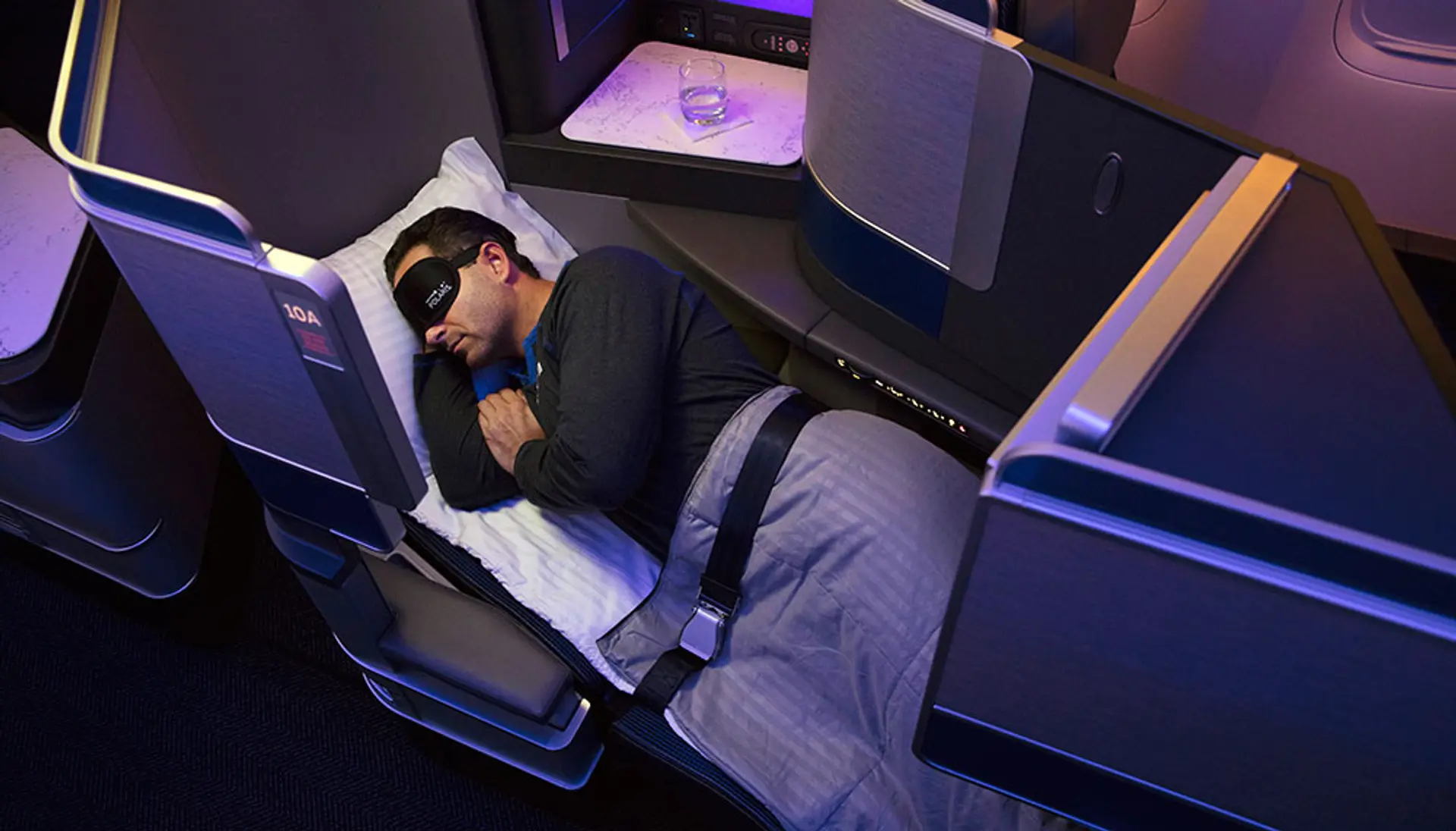
Probably the most impactful innovation in cabin comfort is the fully-flat bed. British Airways helped popularise fully flat business-class beds in the mid-1990s, these coveted seats offer a complete 180 degree recline, allowing passengers to stretch out and drift off in comfort. Reserved for First Class and Business Class cabins, Fully flat beds are now common on many long-haul premium-cabin routes and are offered by most airlines today. Airlines are increasingly offering fully-flat beds in premium cabins, allowing passengers to lie completely horizontal, which significantly improves comfort and sleep quality during long flights and makes it easier to get solid sleep as you fly.

When selecting your seat, consider the pros and cons of an aisle seat versus a window seat. An aisle seat offers easier access to the aisle for stretching or bathroom breaks, but may expose you to more disturbances from other passengers and crew, which can interrupt your sleep. A window seat, on the other hand, provides more privacy and a surface to lean against, making it easier to achieve solid sleep, but limits your ability to get up without disturbing others.
Some airlines, however, offer the slightly less comfortable angled lie-flat seats. These seats, while they also recline to a horizontal position, do so at an angle to the ground. They’re positioned somewhere between 150 and 170 degrees, meaning there’s a slight slope which many passengers find themselves slowly sliding down. While not as comfortable as completely fully-flat beds, they still offer a good opportunity to snooze.
A more recent innovation, Air New Zealand’s ‘Sky Couch’ converts one row of economy seats (three seats) into one cosy bed. They are available on selected Air New Zealand Boeing 777 and Boeing 787 aircraft and have been quite the success since launching in 2011. Given their popularity, The concept has proved popular with couples and families travelling in Economy. The challenge is however that three Economy Class seats are simply too short for most adults to stretch out, and even four seats are not enough for taller passengers. However, opting for extra legroom in these configurations can make a significant difference for achieving solid sleep, especially on long flights where every inch counts.
When considering whether to splurge on premium seating or extra legroom, think about the number of hours you’ll spend in the air. On long-haul flights, the added comfort and ability to rest can be well worth the investment, especially if you value arriving refreshed after several hours of flying.
3. Mood Lighting
These days, most major airlines now feature LED mood lighting as a standard on long-haul flights. Beyond setting the ambiance and inducing rest, these advanced lighting systems offer significant biological benefits for passengers crossing time zones. LED mood lighting helps synchronize passengers’ body clocks with their destination’s time zone, Cabin lighting systems are designed to support passengers’ circadian rhythms and potentially reduce the effects of jet lag.
Blue light from cabin lighting and electronic devices can suppress melatonin production and disrupt circadian rhythms, making it harder to achieve quality sleep. To address this, airlines use blue-rich light during certain phases of the flight to keep passengers alert and aligned with the destination's daylight. As the flight progresses, warm amber and red tones are phased in to trigger natural sleepiness and help regulate sleep, supporting a smoother transition to the new time zone.

These systems can produce millions of colour variations, ranging from cool daylight tones to warmer evening hues, from cool tones of dawn or dusk to a warmer daylight. There is also a ‘silver moonlight’ function to imitate a moon-lit sky. The setting used depends on what time your flight takes off and the direction in which you’re flying. An advanced version of the lighting – part of the Airspace by Airbus concept – Advanced lighting systems are now featured on newer aircraft such as the Airbus A330neo.
4. Bedding and sleepwear
While a bed in the skies gives you a great opportunity to get some shuteye, for a truly great night’s rest, quality bedding and nightwear makes all the difference. One airline that goes above and beyond when it comes to making on-board sleeping as comfortable as possible is Emirates, offers moisturising pyjamas in First Class designed to reduce skin dehydration during long flights

Other innovations in way of bedding include Japan Airlines’ double sided mattress, with one side firm and the other soft, meaning passengers can choose their preference; Virgin Australia’s memory foam mattress; and United Airlines’ custom-designed bedding on board its Polaris Business Class product, for which it has worked with leading luxury specialty store Saks Fifth Avenue to offer plush duvets, lightweight day-blankets, a large and small pillow, slippers, pyjamas, as well as eyeshades and earplugs from Soho House & Co.’s Cowshed Spa.
5. Temperature and humidity
Our circadian rhythms are also influenced by temperature. In light of this, Lufthansa has installed humidifiers in the first-class cabin of its newer Airbus A380s. This increase the relative humidity of the cabin to around 25%. CTT Systems, the Swedish manufacturer of the technology, says it promises to “improve sleep, reduce jet lag and tiredness, and alleviate dehydration of the eyes, skin, and linings of the mouth and nose.”
6. Noise-Cancelling Headphones
One of the biggest challenges when trying to doze on a plane is usually the noise. Whether it’s the baby screaming behind you or the boisterous bachelor party up ahead, the vibrant atmosphere of a commercial flight is far from conducive to sleep. A number of airlines, however, have taken note and are now providing passengers with noise-cancelling headphones in order to shut out the world around them. Among them are Virgin Australia (in First, Business and Premium Economy), Etihad (across all classes), and Singapore Airlines (in First, Business and Premium Economy).

7. In-flight Meditation
Inflight entertainment systems are no longer just for watching movies back to back. Presently, with the growing trend in wellness, and particularly mindfulness, several airlines have introduced relaxation promoting content. Virgin Atlantic, Delta and British Airways all offer on-board meditation videos that provide instruction on how to calm the mind and body when flying. These resources are specifically designed to help you sleep by reducing stress and promoting relaxation, making it easier to rest during your journey.
8. Dining on Demand
Another recent feature being introduced in some airlines’ premium cabins is the option to decide when your meal is served. By dictating when they eat, passengers are able to time their meals in accordance to when they want to sleep. The result; no more trying to sleep through meal service or forcing yourself to stay awake in order to not miss a meal. Emirates, Etihad and Qatar are early adopters of the service, with British Airways rumored to be considering it for its Club World business class.
If these innovative attempts to induce drowsiness still fail, here’s a few extra tips that might help:
- Try to go to sleep and get up at the same time every day\
- Get as much natural sunlight as possible\
- Exercise intensely during the day\
- If in an erect seat, head support is paramount i.e. use a neck pillow\
- Take off your shoes (but make sure to be wearing clean socks)\
- Select your seat wisely for an overnight flight—window seats can minimize disturbances from other passengers and flight attendants, while seats away from the galley or restrooms reduce noise and foot traffic\
- Use an eye mask to block out light, which can inhibit melatonin production and encourage wakefulness, thereby improving sleep quality on planes\
- Practice breathing techniques, such as the 4-7-8 method, to help reduce stress and anxiety, making it easier to fall asleep on a plane\
- Stay relaxed, hydrated, and avoid alcohol, caffeine, nicotine, and heavy meals—remember, alcohol is not a true sleep aid and can actually disrupt sleep quality and REM sleep, making it harder to rest well during your overnight flight
Breathing Techniques for Sleep
Breathing techniques can make all the difference when it comes to falling asleep on a plane, especially during a long haul flight. Deep breathing exercises, such as the “4-7-8” method, are designed to help regulate sleep and calm the mind, making it easier to drift off even in a busy cabin environment. This technique involves inhaling through the nose for four seconds, holding the breath for seven seconds, and exhaling slowly through the mouth for eight seconds. Practicing this simple routine can lower stress levels and promote better sleep quality, allowing you to get a good night’s rest while in the air.
To further enhance your chances of sleep, combine deep breathing with practical sleep aids. Using a sleep mask helps block out unwanted light exposure, while ear plugs create a quieter environment by reducing ambient noise. Together, these tools and techniques can significantly improve your ability to rest and recharge during your flight, ensuring you arrive at your destination feeling refreshed and ready for the day ahead.
Conclusion on Airline Sleep Solutions
Achieving a good night’s sleep on a plane is all about combining smart strategies with the right airline amenities. Choosing your seat wisely—opting for a window seat or angled lie flat seats—can make a significant difference in your comfort and ability to rest. Sleep aids like a supportive neck pillow, eye mask, and ear plugs help block out distractions and create a more restful environment, while managing your sleep schedule and avoiding heavy meals, alcohol, and electronic devices before bedtime can further improve sleep quality.
Understanding your circadian rhythm and adjusting your sleep schedule to match your destination’s time zone is key to reducing jet lag and helping your body adapt more quickly. Airlines such as Singapore Airlines, Virgin Atlantic, and British Airways have introduced features like fully flat beds, premium economy cabins, and noise cancelling headphones to help passengers sleep better and arrive feeling refreshed. Whether you’re a night owl or an early riser, taking advantage of these airline sleep solutions and being mindful of your body’s needs can help you get a good night’s sleep on your next flight. With the right combination of techniques and tools, you can enjoy better sleep quality and make the most of your journey, arriving at your destination ready to take on whatever comes next.