
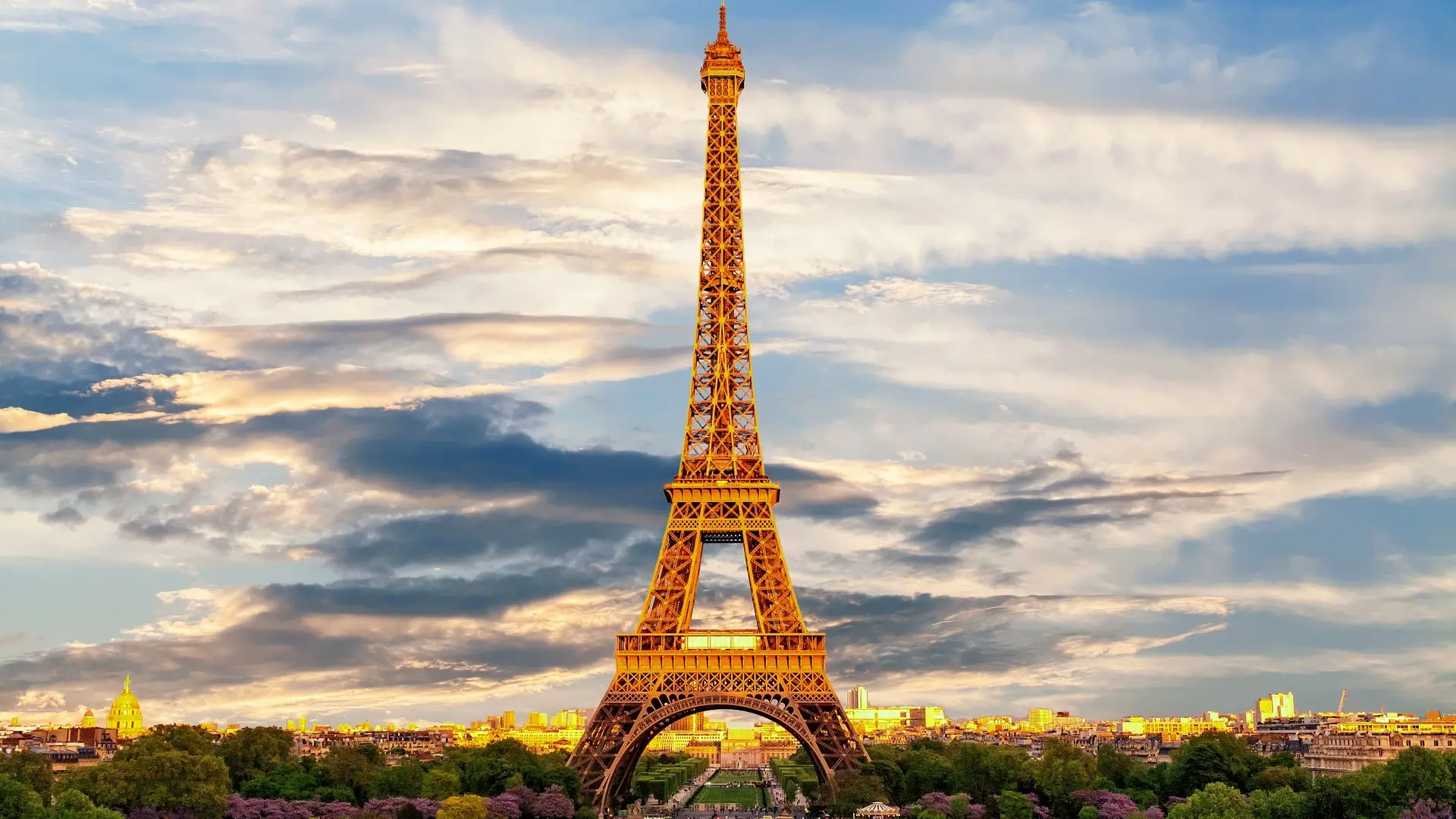
This Paris travel guide is designed to help affluent travellers plan a richer, more polished stay in the French capital, whether it is a first visit built around the Eiffel Tower, the Louvre and Notre-Dame or a return trip focused on finer details, from Le Marais and Montmartre to Saint-Germain-des-Prés. Audrey Hepburn was right when she said, “Paris is always a good idea.”
Paris is a city that has perfected the art of seduction. Elegant boulevards, magnificent museums, grand hotels, intimate cafés, haute couture boutiques and candlelit restaurants create a setting that feels almost impossibly cinematic. The River Seine winds through the historic heart, while the Eiffel Tower presides over a skyline of domes, church spires and beautiful Haussmann façades.
Yet the French capital is far more than its celebrated monuments. It is a city of neighbourhoods, each with its own personality: the artistic streets of Montmartre, the fashionable boutiques of Le Marais, the intellectual cafés of Saint-Germain-des-Prés and the grand avenues of the Champs-Élysées. It is also a culinary capital where a perfect croissant, a memorable plate of steak frites and a glass of excellent wine can be every bit as rewarding as a Michelin-starred tasting menu.
This guide covers the landmarks, museums, neighbourhoods, dining, luxury hotels, shopping districts, cultural experiences, practical travel logistics, suggested itineraries and worthwhile day trips that shape a well-planned Paris stay. Paris is history and modernity, refinement and rebellion, grand gestures and wonderfully ordinary pleasures, which is precisely why it remains one of the world’s most rewarding destinations for travellers who want more than a checklist of sights.
Spend the morning admiring masterpieces at the Louvre, the afternoon browsing independent bookshops, and the evening watching the Eiffel Tower sparkle above the Seine.
There is always another museum, another pâtisserie, another hidden courtyard or another reason to linger over dinner.
The only difficulty is deciding where to begin.

Why Visit Paris?
Paris combines some of the world's most recognisable landmarks with an extraordinary range of art, architecture, food, fashion and cultural experiences. Few destinations offer quite the same combination of historic monuments, celebrated restaurants, luxury shopping, elegant hotels and atmospheric neighbourhoods.
For first-time visitors, the obvious attractions are irresistible: the Eiffel Tower, the Louvre, Notre-Dame Cathedral, the Arc de Triomphe and the Champs-Élysées. Beyond them, however, lie the intimate pleasures that make Paris so memorable: a walk along the Seine, a morning spent in a traditional bakery, an afternoon in a small art museum and an evening in a neighbourhood wine bar.
Paris is equally appealing for different kinds of travellers. Couples can indulge in romantic hotels and river cruises, families can explore interactive museums and magnificent gardens, and solo travellers can spend days wandering between galleries, markets and cafés.
Whether you have 48 hours or two weeks, Paris offers enough to fill your itinerary several times over.

The Eiffel Tower: At the Very Heart of Paris
Few structures have achieved the cultural significance of the Eiffel Tower. Designed by engineer Gustave Eiffel's company and completed for the 1889 World's Fair, the wrought-iron landmark was built to commemorate the centenary of the French Revolution.
At approximately 330 metres tall, including its antennas, the tower became the world's tallest man-made structure when it opened, retaining the title until New York's Chrysler Building surpassed it in 1930.
Initially controversial among some artists and intellectuals, the tower has since become the defining symbol of Paris and one of the most recognisable structures on the planet.
Climbing the Eiffel Tower
The tower offers three principal visitor levels, with spectacular perspectives across the French capital. The second floor provides an excellent balance between height and visibility, while the summit offers a more expansive panorama on clear days.
The first floor is worth exploring in its own right, with exhibitions, viewing areas and a glass floor that provides a dramatic view of the ground below.
Visitors can ascend by lift or take the stairs to the second floor, depending on their ticket. Summit access is via lift, and the uppermost level may be restricted during adverse weather or other operational conditions.
Book tickets through the official Eiffel Tower website well in advance, particularly during school holidays and peak summer periods. Check the available ticket types carefully: access to the summit is not included in every ticket.
The Best Views of the Eiffel Tower
The tower is magnificent from almost every angle, but some locations are particularly rewarding.
- Trocadéro Gardens: One of the most celebrated viewpoints, with broad perspectives towards the tower.
- Champ de Mars: The landscaped grounds provide a beautiful approach to the monument.
- Pont de Bir-Hakeim: A striking bridge offering architectural framing and excellent photographic opportunities.
- Arc de Triomphe: The rooftop terrace provides a sweeping panorama that includes the Eiffel Tower.
- Seine riverbanks: Particularly atmospheric around sunset and after dark.
- Montparnasse Tower: A high-level viewpoint offering a panoramic view of Paris, including the Eiffel Tower itself.
- Hotel terraces and suites: For those seeking a more indulgent perspective, certain rooms and restaurants offer views across the Parisian skyline.
The walk through the Champ de Mars is especially pleasant in the warmer months, when locals gather on the lawns and the tower lights up as evening falls.
The Eiffel Tower After Dark
Paris takes on an entirely different character after sunset.
The Eiffel Tower is illuminated every evening, and its sparkling light display begins after nightfall at regular hourly intervals for a limited period. Exact timings vary with the season and operational arrangements.
For the best experience, find a comfortable viewpoint, order a glass of Champagne if you wish, and give yourself time to enjoy the spectacle rather than photographing it and immediately moving on.
Dining at the Eiffel Tower
The tower is also a destination for memorable dining experiences.
Le Jules Verne, located on the second floor, is a celebrated fine-dining restaurant associated with chef Frédéric Anton. Its setting combines refined cuisine with elevated views of Paris. Reservations should be made well ahead, and visitors should confirm the current menu, pricing and Michelin status before booking.
Madame Brasserie, on the first floor, offers another opportunity to dine within the tower, with views over the surrounding city.
The experience is not inexpensive, but for a special occasion, few settings are more recognisably Parisian.

The Arc de Triomphe: A Monument to French History
Commissioned by Napoleon in 1806 and inaugurated in 1836 under King Louis-Philippe I, the Arc de Triomphe honours those who fought and died for France during the French Revolution and Napoleonic Wars.
The monument stands at the centre of Place Charles-de-Gaulle, where twelve avenues radiate outwards in a dramatic star-shaped pattern. The square was historically known as Place de l'Étoile, meaning the star.
The names of military victories and generals are inscribed on the monument, while the Tomb of the Unknown Soldier lies beneath the arch. the eternal flame is rekindled each evening in memory of the dead of the First World War.
Climb to the Rooftop Terrace
The rooftop terrace is one of Paris's most rewarding viewpoints. From here, the Champs-Élysées stretches towards Place de la Concorde, while the surrounding avenues form a remarkable geometric pattern.
The Eiffel Tower appears in the distance, and the panorama illustrates the scale and symmetry of Paris's grand urban design.
Access involves stairs, so allow for the climb and check current accessibility arrangements before visiting.
For safety, never attempt to cross the traffic lanes around the monument. Use the pedestrian underpass to reach the entrance.

The Champs-Élysées: Parisian Grandeur
The Champs-Élysées is among the world's most famous avenues, extending for approximately 1.9 kilometres between Place de la Concorde and the Arc de Triomphe.
Its western section is lined with flagship fashion stores, cinemas, cafés and restaurants, while the eastern end transitions into gardens and monumental architecture.
For shoppers, it offers an impressive concentration of international brands. For visitors interested in Parisian history, it is also an essential part of the city's ceremonial landscape, hosting major national celebrations and events.
The avenue can become exceptionally busy, particularly during holiday periods and major public occasions. Explore the side streets as well as the main thoroughfare, and remember that some of independent boutiques and specialist shops can also be found in other neighbourhoods.

Place de la Concorde and the Tuileries Garden
At the eastern end of the Champs-Élysées lies Place de la Concorde, one of Paris's largest historic squares.
Its Egyptian obelisk, monumental fountains and broad perspectives make it an impressive place to pause before continuing towards the Tuileries Garden and the Louvre.
The Tuileries Garden was created for the former Tuileries Palace and remains one of the city's most elegant public green spaces. Formal avenues, sculptures, ponds and chairs invite visitors to slow down between sightseeing stops.
It is an excellent location for a morning walk, an informal picnic or a brief escape from the city's busy streets.

The Louvre: A World of Masterpieces
The Louvre is one of the world's most-visited museums and an essential stop for many first-time visitors to Paris.
Originally a medieval fortress, the complex developed into a royal palace before becoming a public museum during the French Revolution. Its collections span thousands of years and include Egyptian antiquities, Greek and Roman sculpture, European painting, decorative arts and objects from civilisations across the world.
The glass pyramid designed by architect I. M. Pei, inaugurated in 1989, provides the museum's best-known modern entrance and has become an architectural landmark in its own right.
What to See at the Louvre
The museum is enormous. Attempting to see everything in a single visit is a recipe for exhaustion.
Instead, plan a route around the works that interest you most.
- Mona Lisa: Leonardo da Vinci's celebrated portrait remains the museum's most famous painting.
- Venus de Milo: An iconic ancient Greek sculpture.
- Winged Victory of Samothrace: A dramatic Hellenistic sculpture displayed on a monumental staircase.
- The Wedding at Cana: Paolo Veronese's enormous Renaissance painting.
- Liberty Leading the People: Eugène Delacroix's powerful depiction of revolution.
- Egyptian antiquities: A remarkable collection covering ancient Egyptian civilisation.
- French royal and decorative arts: Lavish objects, interiors and furnishings that illuminate the history of the French monarchy.
Allow at least three hours for a focused visit, and considerably longer if you enjoy exploring museums at leisure.
How to Plan Your Louvre Visit
Book through the official Louvre website and check opening hours before your visit; for popular dates, tickets can be worth booking up to 60 days in advance. The museum is normally closed on Tuesdays, although schedules and exceptional closures should always be verified.
Choose a small number of galleries or masterpieces in advance, arrive with enough time to pass security and use the official museum map to navigate between collections. A Paris Museum Pass can help skip lines at attractions, including the Louvre when applicable.
Do not assume that a timed ticket guarantees immediate entry at every stage, particularly during busy periods, so booking early can help you avoid a long queue.
The Louvre is one of those places where preparation makes a remarkable difference.

Musée d'Orsay: Impressionism at Its Finest
Housed in a former railway station, the Musée d'Orsay is one of Paris's most atmospheric museums.
Its enormous clock, iron-and-glass architecture and elegant galleries provide a setting as memorable as the artworks themselves.
The collection focuses particularly on art from the mid-nineteenth century to the early twentieth century, with celebrated works by Monet, Renoir, Degas, Van Gogh, Cézanne and many other artists.
For visitors interested in Impressionism and Post-Impressionism, the museum is an essential complement to the Louvre.
Allow two to three hours, or longer if you want to explore the collection thoroughly.

Musée de l'Orangerie: Monet's Water Lilies
Set beside the Tuileries Garden, the Musée de l'Orangerie is best known for Claude Monet's monumental Water Lilies paintings.
The purpose-designed oval rooms allow visitors to experience the paintings on an expansive scale, creating a contemplative atmosphere that contrasts with the bustle of central Paris.
The museum also houses an impressive collection of modern art.
It is smaller than the Louvre or Musée d'Orsay, making it an excellent choice for travellers who want an exceptional art experience without committing an entire day.

Musée Marmottan Monet
For Monet enthusiasts, the Musée Marmottan Monet is particularly rewarding.
Located in the western part of Paris, it houses a significant collection of works by the Impressionist master, including the painting Impression, Sunrise, which helped give Impressionism its name.
Its quieter atmosphere makes it a compelling alternative to the busiest museums in the centre.
Allow additional travel time, as it is not immediately beside the main Louvre–Orsay museum corridor.

Musée Rodin: Sculpture in a Garden
The Musée Rodin is dedicated to the work of sculptor Auguste Rodin and occupies an elegant historic mansion surrounded by a beautiful garden.
Among its most famous works are The Thinker, The Gates of Hell and The Kiss.
The combination of sculpture, architecture and landscaped grounds makes this one of Paris's most enjoyable cultural experiences, especially in fine weather.
It is also an excellent choice for visitors who want to combine art with a peaceful outdoor setting.

The Centre Pompidou and Contemporary Art
Paris's modern and contemporary art scene deserves attention beyond its celebrated historic collections.
The Centre Pompidou has long been one of the city's most distinctive cultural landmarks, recognisable for its exposed structural elements and colourful external services.
However, its main building closed for a major renovation programme beginning in 2025, with reopening planned after the works. Visitors should check the institution's current arrangements and temporary exhibition locations before making plans.
For contemporary art, also consider galleries in Le Marais, independent exhibition spaces and the Fondation Louis Vuitton, whose striking architecture is itself a major attraction.

Notre-Dame Cathedral: A Gothic Masterpiece Reborn
Notre-Dame de Paris is one of the most important landmarks in French history and Gothic architecture.
Situated on the Île de la Cité, the cathedral has watched over the Seine for more than eight centuries. Its sculpted portals, rose windows, flying buttresses and towers make it one of the defining monuments of the French capital.
The devastating fire of April 2019 destroyed much of the roof and spire, prompting an extraordinary restoration effort. The cathedral reopened to the public in December 2024, although restoration and associated works have continued in parts of the complex.
Visitors can admire its restored interior, historic architecture and extraordinary stained glass. Check current entry arrangements and any booking recommendations through the official Notre-Dame visitor information.
A visit is particularly rewarding when combined with a walk along the Seine and a stop at the nearby Sainte-Chapelle.

Sainte-Chapelle: A Symphony of Stained Glass
Sainte-Chapelle is one of Paris's most extraordinary medieval monuments.
Built in the thirteenth century for King Louis IX, the chapel is renowned for its towering stained-glass windows depicting biblical scenes.
On a bright day, the upper chapel is transformed by coloured light, creating an experience that feels almost otherworldly.
The building is relatively compact, so a visit can be combined easily with Notre-Dame and the Conciergerie.
Advance booking is advisable during busy periods.

The Conciergerie: A Darker Chapter of Parisian History
Also located on the Île de la Cité, the Conciergerie was once part of the medieval royal palace and later became a notorious prison during the French Revolution.
Its most famous prisoner was Marie Antoinette, who was held here before her execution in 1793.
The historic rooms and exhibitions offer a fascinating introduction to the Revolution and the transformation of Paris during one of the most turbulent periods in French history.
For visitors interested in the darker side of the capital, the Conciergerie provides a compelling counterpoint to the city's more glamorous attractions.

The Seine: Paris at Its Most Romantic
The River Seine is one of the defining features of Paris.
Its banks, bridges and islands provide a natural route through the city's history, connecting major landmarks and offering countless opportunities for photography, leisurely walks and riverside picnics.
The riverside atmosphere changes throughout the day. Mornings are relatively peaceful, afternoons bring walkers and cyclists, and evenings create a wonderfully romantic setting as monuments begin to illuminate.
Take a Seine River Cruise
A river cruise is one of the easiest ways to appreciate the scale and architecture of central Paris.
Sightseeing cruises typically pass major landmarks, including the Eiffel Tower, the Louvre, Notre-Dame and several historic bridges. Dinner cruises offer a more elaborate experience, combining views with a meal.
For a special occasion, consider a smaller vessel or private cruise, particularly if you prefer a more intimate atmosphere.
Compare departure points, cruise duration, menus and inclusions before booking.
Walk Across Paris's Most Beautiful Bridges
The city's bridges are attractions in their own right.
Pont Alexandre III is celebrated for its elaborate ornamentation and sweeping views. Pont Neuf, despite its name meaning “New Bridge”, is the oldest standing bridge across the Seine in Paris. Pont des Arts is another popular pedestrian crossing, while Pont de Bir-Hakeim offers striking architectural perspectives towards the Eiffel Tower.
Walking between bridges is one of the simplest ways to experience Paris without a rigid itinerary.

Montmartre: The Artistic Soul of Paris
Montmartre has long been associated with artists, writers, performers and the bohemian culture of Paris.
Its winding lanes, steep stairways, old cafés and village-like squares create a markedly different atmosphere from the grand avenues below.
Artists including Picasso, Renoir and Toulouse-Lautrec were associated with the area's creative history, and its reputation continues to attract visitors seeking a more intimate and atmospheric side of the city.
Sacré-Cœur Basilica
The white-domed Basilica of Sacré-Cœur crowns the hill of Montmartre and offers sweeping views across Paris.
Consecrated in 1919, the basilica is a major religious landmark, with a striking interior and a monumental mosaic.
The surrounding steps and viewpoints are popular places to pause, particularly around sunset.
The ascent involves stairs or a funicular, depending on your route. Comfortable shoes are recommended.
Place du Tertre
Place du Tertre is the historic square where artists display paintings and offer portraits.
It is one of Montmartre's best-known attractions and can be extremely busy during the day.
For a more relaxed experience, explore the surrounding side streets, where small cafés, galleries and historic buildings reveal a quieter personality.
The Moulin Rouge
The Moulin Rouge has been synonymous with Parisian nightlife since its opening in 1889.
Famous for its red windmill, elaborate stage productions and association with the can-can, it remains one of the city's best-known cabaret venues.
A performance can make for a memorable evening, particularly for travellers interested in Paris's theatrical history.
Book through the official venue and check the current show schedule, seating arrangements and dinner options.
Folies Bergère
The Folies Bergère is another historic Parisian entertainment institution.
Associated with music hall, variety performances and the Belle Époque, the venue played an important role in the city's theatrical and cultural life.
Its history is also immortalised in Édouard Manet's painting A Bar at the Folies-Bergère.
Check the current programme if you would like to attend a performance.
Explore Beyond the Main Tourist Streets
Montmartre is at its most charming when you venture away from the busiest approaches to Sacré-Cœur.
Look for the quieter lanes around Rue de l'Abreuvoir, the historic windmills, the Montmartre vineyard and the neighbourhood's small museums.
Arrive early in the morning or later in the evening to experience a calmer side of the district.

Le Marais: Boutiques, History and Parisian Cool
Le Marais is one of Paris's most appealing neighbourhoods for visitors who enjoy independent shopping, historic architecture, cafés and contemporary culture.
Spread across parts of the third and fourth arrondissements, it contains elegant historic mansions, small museums, galleries and lively streets.
Place des Vosges is one of the district's highlights, with its harmonious architecture and landscaped central garden.
The neighbourhood is also known for its Jewish heritage, particularly around Rue des Rosiers, as well as its vibrant LGBTQ+ scene.
Spend an afternoon browsing independent fashion boutiques, visiting museums and stopping for pastries or coffee.
Le Marais is equally rewarding for shopping and simply wandering without a plan.

Saint-Germain-des-Prés: Literary Paris
Saint-Germain-des-Prés embodies the intellectual and artistic image of Paris.
Historic cafés, bookshops, galleries and elegant streets have attracted writers, philosophers and artists for generations.
Cafés such as Les Deux Magots and Café de Flore remain famous for their associations with literary and intellectual life, although their popularity means prices can be higher than at less celebrated neighbourhood establishments.
The area is also excellent for boutique shopping and leisurely lunches.
For a quintessential Parisian afternoon, settle into a terrace, order coffee and observe the city performing one of its oldest rituals: doing very little, very elegantly.

The Latin Quarter: History and Student Life
The Latin Quarter is centred on the historic university district of the Left Bank.
Its narrow streets, bookshops, restaurants and classic pavement cafes give it a lively atmosphere, while landmarks such as the Panthéon, the final resting place of French luminaries, and the Sorbonne reveal its long intellectual heritage.
The area is especially appealing for visitors who enjoy history and culture without the formality of the grand shopping districts.
Explore the streets around Rue Mouffetard, visit the Panthéon and take time to discover the smaller squares and independent shops.

Île Saint-Louis: A Quiet Island Escape
Île Saint-Louis is one of the most atmospheric places in central Paris.
Its elegant residential streets, historic façades, independent shops and small cafés create a more intimate setting than the surrounding tourist hotspots.
The island is ideal for a leisurely walk after visiting Notre-Dame.
It is also associated with the famous Berthillon ice cream, although availability and opening arrangements vary by outlet and season.
Come for a stroll, stay for dessert.

Canal Saint-Martin: Contemporary Paris
For a more contemporary and relaxed atmosphere, explore Canal Saint-Martin.
The tree-lined canal, iron footbridges, waterside cafés and independent boutiques make it a favourite for leisurely walks and informal gatherings.
The neighbourhood has a younger, creative energy and provides a welcome alternative to the monumental centre.
It is particularly appealing in warmer weather, when people gather beside the water for picnics and drinks.

Belleville and the City's Multicultural Side
Belleville offers a more varied and multicultural picture of Paris.
The neighbourhood has a strong street-art scene, lively food culture and excellent opportunities to explore areas beyond the conventional tourist circuit.
Parc de Belleville provides an elevated view across the city, while the surrounding streets reveal a different side of everyday Parisian life.
Visitors interested in food, art and local neighbourhoods may find this one of the most rewarding areas to explore.

Paris Shopping: From Haute Couture to Hidden Boutiques
Paris remains one of the world's great fashion capitals.
The city offers everything from international luxury flagships and historic department stores to independent designers, vintage shops and specialised bookshops.
Avenue Montaigne
Avenue Montaigne is synonymous with luxury fashion.
Its elegant façades house major international fashion houses, making it one of the city's most prestigious shopping addresses.
Rue Saint-Honoré
Rue Saint-Honoré offers a sophisticated mix of luxury fashion, accessories, design boutiques and contemporary retail.
It is an excellent area for browsing beyond the largest flagship stores.
The Champs-Élysées
The Champs-Élysées combines internationally recognised brands with cafés, cinemas and high-profile retail.
It is convenient for visitors wanting to combine shopping with sightseeing, although it can be crowded.
Boulevard Haussmann and Galeries Lafayette
Galeries Lafayette is one of Paris's great department stores.
Its historic building is famous for its spectacular dome, extensive fashion floors and rooftop terrace, which offers views over the city.
The flagship Galeries Lafayette department store is located on Boulevard Haussmann, rather than on the Champs-Élysées. Visitors should check the current opening hours and access arrangements for the rooftop.
Nearby, Printemps offers another major department-store experience.
Le Bon Marché and La Grande Épicerie
Le Bon Marché, on the Left Bank, is celebrated for its curated selection of fashion, beauty, homeware and design.
Its neighbouring food emporium, La Grande Épicerie de Paris, is an excellent destination for gourmet products, pastries, cheeses, wines and edible souvenirs.
It is particularly appealing to travellers who appreciate luxury shopping without the intensity of the busiest central avenues.
7L Bookstore
For readers and design enthusiasts, 7L Bookstore is associated with the creative world of Karl Lagerfeld.
Its selection focuses on subjects including fashion, photography, architecture and design.
Check current opening arrangements before visiting, as specialist retail locations can change their hours or access policies.
Marché aux Puces de Saint-Ouen
The Saint-Ouen flea-market district, north of central Paris, is a destination for antiques, vintage furniture, art, collectables and unusual objects.
The wider market comprises numerous specialised areas rather than a single uniform marketplace.
Allow several hours to explore, and check opening days before travelling. Serious collectors may wish to research specific market sections in advance.

Parisian Food: An Epicurean Wonderland
Paris is one of the world's great culinary capitals.
The city's food culture encompasses everything from traditional bistros and neighbourhood bakeries to contemporary tasting menus, elegant hotel restaurants and some of the most celebrated kitchens in international gastronomy.
Yet the secret to eating well in Paris is not to chase expensive reservations at every opportunity.
A freshly baked croissant, a carefully prepared omelette, a plate of seasonal vegetables or a simple steak frites can be every bit as memorable as a formal tasting menu.
The Essential Parisian Breakfast
Start the day at a traditional bakery.
Order a croissant, pain au chocolat or a slice of buttery brioche, accompanied by a café crème or espresso.
For a more substantial breakfast, look for a neighbourhood café offering eggs, toast, yoghurt and fruit.
Parisian breakfasts vary considerably, so do not assume every café serves a full cooked meal.
Croissants and French Pastries
The croissant is perhaps the most recognisable symbol of French breakfast culture.
A good one should have a deeply golden exterior, crisp layers and a buttery interior.
Beyond croissants, look for pain au chocolat, pain aux raisins, chaussons aux pommes and seasonal fruit tarts.
For visitors with a sweet tooth, exploring Paris through its bakeries is an itinerary in itself.
French Cheese and Wine
A traditional French meal might include cheese, bread and wine, although contemporary eating habits are considerably more varied than this familiar image suggests.
Paris offers excellent fromageries where you can discover regional cheeses, from creamy Brie and Camembert to stronger washed-rind varieties and aged mountain cheeses.
Pair them with fresh bread and, if you drink alcohol, a suitable French wine.
For a picnic, choose cheeses that travel well and check whether your accommodation permits eating in shared areas.
Macarons and Chocolate
Macarons are among Paris's most celebrated sweet treats.
Ladurée and Pierre Hermé are two of the best-known names, offering colourful collections of delicate almond-based shells with ganache, buttercream or other fillings.
Paris is also home to excellent chocolatiers, and its wider sweet-food scene includes standout chocolate shops producing pralines, ganaches, bars and seasonal creations.
These make particularly attractive gifts, although delicate pastries are best enjoyed soon after purchase.
Crêpes and Galettes
Crêpes are a familiar Parisian treat, available with sweet fillings such as sugar, chocolate, fruit or caramel.
For a savoury alternative, try a Breton-style galette, traditionally made with buckwheat flour and filled with ingredients such as cheese, ham and egg.
They make an excellent lunch, particularly when paired with a simple salad.
Steak Frites and French Bistro Classics
For traditional bistro dining, look for dishes such as steak frites, confit de canard, onion soup, roast chicken and seasonal vegetable preparations.
Menus vary by restaurant and season, but the appeal remains the same: straightforward dishes executed with care.
Reserve ahead for popular neighbourhood establishments, particularly at weekends.
Hot Chocolate at Angelina
Angelina is famous for its rich hot chocolate, often served in a thick, almost dessert-like style.
Its historic tea room on Rue de Rivoli is a popular stop for visitors exploring the Tuileries and Louvre area.
Pair the chocolate with a pastry if you wish, but be warned: this is not a drink designed for anyone who considers chocolate merely an occasional indulgence.
Parisian Food Markets
Food markets are an excellent way to discover seasonal produce, cheeses, bread, charcuterie and regional specialities.
Markets vary by neighbourhood and operating day, so check the local schedule before setting out.
Pick up ingredients for a picnic in one of Paris's gardens, or simply browse the stalls and sample something that catches your attention.

Where to Eat in Paris
Paris has an extraordinary range of restaurants, and the best choice depends on the experience you want.
For a classic Parisian atmosphere, explore the traditional bistros of Saint-Germain-des-Prés, the Latin Quarter and the smaller streets of the central arrondissements.
For contemporary dining, look towards neighbourhoods such as the 10th, 11th and 12th arrondissements, where innovative restaurants and wine bars have helped shape the city's modern culinary identity.
For luxury dining, several palace hotels and independent restaurants offer elaborate tasting menus, exceptional wine lists and polished service.
Le Meurice Alain Ducasse
Le Meurice is one of Paris's celebrated luxury hotels, and its restaurant has long been associated with haute cuisine.
Its elegant dining rooms and refined French cooking make it a natural choice for a special occasion.
Menus, chefs and Michelin distinctions can change, so verify the current restaurant details before booking.
Le Gabriel at La Réserve Paris
Le Gabriel is the fine-dining restaurant associated with La Réserve Paris.
The hotel is known for its intimate scale and refined interiors, while the restaurant offers an ambitious contemporary approach to French gastronomy.
For an important celebration, check the current menu, reservation policy and pricing well ahead.
Le Train Bleu
Located inside the Gare de Lyon railway station, Le Train Bleu is famous for its lavish historic interiors, ornate ceiling paintings and grand dining-room atmosphere.
It offers an experience that feels like stepping into another era.
The restaurant is particularly convenient for travellers passing through the station, but it is worth visiting for its architecture alone.
Cristal Room Baccarat
The Cristal Room Baccarat is associated with the Baccarat crystal house and the world of refined French dining.
Its setting is part of the attraction, combining decorative craftsmanship with an elegant restaurant experience.
Check current opening arrangements, restaurant operations and menu details before planning a visit.
Septime and Septime La Cave
Septime is associated with contemporary Parisian dining and a seasonal, produce-focused approach.
Its neighbouring wine-bar concept, Septime La Cave, offers a more informal way to explore the team's wine and food sensibilities.
Reservations at sought-after restaurants can be difficult, so plan ahead and always verify the current booking policy.
How to Choose a Michelin-Starred Restaurant
Michelin recognition can be a useful starting point, but it should not be the only factor in choosing a restaurant.
Consider the style of cooking, menu length, atmosphere, location, dietary requirements and total cost.
Check the latest Michelin Guide restaurant listings before booking, since stars and restaurant operations may change.
For a more relaxed evening, an excellent neighbourhood bistro may prove every bit as memorable.

Parisian Cafés and Wine Bars
Café culture is integral to the Parisian experience, and cafes are part of the local rhythm.
a good place to watch everyday Parisian life, while traditional cafés offer a convenient pause between museums and shopping, and a coffee shop can be a useful stop for pastries or a break.
Wine bars provide another appealing way to explore French food and drink. Many focus on regional wines, small plates and seasonal ingredients.
If you prefer a quieter atmosphere, explore side streets rather than choosing the busiest terrace beside a major landmark.
And remember: there is no requirement to finish your coffee quickly.
In Paris, lingering is part of the pleasure.

Paris at Night: Cabaret, Jazz and Cocktails
Paris offers an extraordinary range of evening entertainment.
The Moulin Rouge and other cabaret venues provide theatrical productions, while jazz clubs and live-music bars offer more intimate alternatives.
Rooftop bars and elegant hotel lounges are particularly appealing for travellers seeking a sophisticated evening.
For a quieter experience, take a walk along the Seine after dark, when many of the city's monuments are illuminated.
Book popular performances in advance, and check transport options for the return journey if the show finishes late.

Paris's Most Beautiful Parks and Gardens
Paris is a city of magnificent gardens, providing a welcome balance to its museums, shopping streets and busy boulevards.
Jardin du Luxembourg
The Luxembourg Gardens are among the city's most beautiful green spaces.
Formal flowerbeds, tree-lined paths, fountains and the central pond create an elegant setting for walking and relaxing.
The gardens are particularly attractive in spring and summer.
Jardin des Tuileries
Located between the Louvre and Place de la Concorde, the Tuileries is ideal for combining outdoor relaxation with sightseeing.
Its central position makes it one of the easiest gardens to incorporate into a busy itinerary.
Parc des Buttes-Chaumont
For a different perspective, visit Parc des Buttes-Chaumont in northeastern Paris.
Its sloping paths, dramatic landscaping, lake and elevated viewpoints create a less formal atmosphere than the central gardens.
Bois de Boulogne and Bois de Vincennes
These extensive green spaces on opposite sides of Paris provide opportunities for walking, cycling and spending time away from the dense city centre.
They are particularly suitable for visitors who have several days in Paris and want to explore beyond the most famous landmarks.

Paris's Darker Side: Catacombs and Cemeteries
Beneath the elegant boulevards lies a more unsettling chapter of Parisian history.
The Paris Catacombs
The Catacombs contain the remains of millions of Parisians transferred from overcrowded cemeteries into former limestone quarries.
The result is an extraordinary underground ossuary, with bones arranged in carefully structured displays.
A visit offers a very different perspective on the city's history, urban development and relationship with death.
The route involves stairs and underground passages, and conditions can be cool and damp. Check official access arrangements, ticket availability and accessibility information before visiting.
Père Lachaise Cemetery
Père Lachaise is one of the world's most famous cemeteries and a remarkable open-air landscape of funerary art, monuments and mature trees.
Its notable graves include those associated with Oscar Wilde, Jim Morrison and Frédéric Chopin, among many other cultural figures.
The cemetery is large, so choose a route in advance if you have particular graves in mind.
Allow time to explore beyond the most famous stops. The architecture and atmosphere are part of the experience.

Luxury Hotels in Paris: From Grand Palaces to Private Sanctuaries
Paris is one of the world's great luxury-hotel destinations.
The city's finest properties combine historic architecture, exquisite interiors, attentive service, celebrated restaurants and experiences tailored to individual guests.
Some offer grand public salons and traditional Parisian elegance; others favour contemporary design, intimate settings and discreet luxury.
Le Meurice
Le Meurice occupies a prestigious position on Rue de Rivoli, close to the Louvre and Tuileries Garden.
Its history, elegant interiors and celebrated hospitality have made it one of Paris's most recognisable luxury hotels.
The hotel has long attracted artists, designers and international guests, including Salvador Dalí.
It is an excellent choice for travellers who want a classic Parisian palace experience within walking distance of major cultural attractions.
Mandarin Oriental, Paris
Located near Rue Saint-Honoré, Mandarin Oriental, Paris combines contemporary luxury with a central location convenient for high-end shopping.
The hotel offers refined accommodation, dining and wellness facilities, along with a distinctive design sensibility.
It is particularly suitable for travellers who want a sophisticated base close to the fashion district.
Four Seasons Hotel George V
Four Seasons Hotel George V is one of Paris's best-known luxury addresses, located near the Champs-Élysées.
The hotel is celebrated for its elaborate floral displays, elegant rooms and suites, and exceptional dining.
Its restaurants and luxurious public spaces make it a destination in their own right, even for visitors who are not staying overnight.
La Réserve Paris
La Réserve offers a more intimate luxury experience, combining residential-style interiors with personalised service.
Its setting near the Champs-Élysées makes it convenient for exploring the western part of central Paris.
Park Hyatt Paris-Vendôme
Park Hyatt Paris-Vendôme is a refined luxury property in a prestigious central location, convenient for the Place Vendôme, Rue Saint-Honoré and the Louvre area.
It is an appealing choice for visitors seeking contemporary comfort with access to major shopping streets.
Hôtel Plaza Athénée
Located on Avenue Montaigne, Hôtel Plaza Athénée is closely associated with Parisian fashion and haute couture.
Its elegant façade, luxury accommodation and dining experiences make it particularly appealing for travellers who want to immerse themselves in the city's most glamorous side.
Choosing the Right Luxury Hotel
When comparing luxury hotels, look beyond the room rate.
Consider the neighbourhood, room category, views, dining options, spa facilities, service inclusions and cancellation policy.
A room overlooking the Eiffel Tower may command a substantial premium, while a hotel a few streets away may offer a more practical location for exploring multiple neighbourhoods.
For a special occasion, request the room category and view you actually want rather than assuming every suite offers the same perspective.

Where to Stay in Paris: A Neighbourhood Guide
Choosing the right base can make a significant difference to your trip.
Paris's arrondissements each have their own character, and the best location depends on your budget, interests and preferred atmosphere.
The 1st and 2nd Arrondissements: Central Paris
These districts are particularly convenient for the Louvre, Palais Royal, shopping and major transport connections.
They suit first-time visitors who want to spend much of their time exploring the historic centre.
The 3rd and 4th Arrondissements: Le Marais
Le Marais is ideal for travellers interested in boutiques, cafés, historic architecture and nightlife.
It offers a lively atmosphere and convenient access to the Seine and several major museums.
The 5th Arrondissement: Latin Quarter
The Latin Quarter is a good choice for history, student life, independent bookshops and traditional cafés.
It is also convenient for the Panthéon, Jardin des Plantes and the Île de la Cité.
The 6th Arrondissement: Saint-Germain-des-Prés
This is one of the most appealing areas for visitors who want classic Parisian cafés, galleries, boutique shopping and elegant streets.
It is particularly popular with couples and travellers seeking a refined atmosphere.
The 7th Arrondissement: Eiffel Tower and Invalides
The seventh arrondissement provides access to the Eiffel Tower, Musée d'Orsay, Les Invalides and some of the city's most elegant residential streets, while being centrally located for several major sights on this side of Paris.
It is an excellent option for travellers prioritising landmark views and a quieter evening atmosphere.
The 8th Arrondissement: Champs-Élysées and Luxury Shopping
The eighth arrondissement suits luxury shoppers and visitors seeking high-end hotels, restaurants and access to the Arc de Triomphe.
The 9th Arrondissement: Theatres and Department Stores
The ninth arrondissement offers access to the Opéra Garnier, department stores and a lively dining scene.
It can be a practical base for travellers who want central access without necessarily staying beside the most famous monuments.
The 10th and 11th Arrondissements: Contemporary Paris
These districts are associated with restaurants, bars, cafés and a lively contemporary arts and dining scene.
They are particularly appealing to repeat visitors and travellers interested in exploring the city beyond its traditional landmarks.
The 18th Arrondissement: Montmartre
Montmartre offers character, views and a village-like atmosphere.
However, some streets are steep, and travel to attractions elsewhere in Paris may require more time.
How to Choose
For a first visit, prioritise convenient access to the Metro and the attractions you most want to see.
Do not choose a hotel solely because it has an Eiffel Tower view. A well-connected location, comfortable room and easy access to restaurants can contribute more to the overall experience.

Getting Around Paris
Paris is well served by public transport, with the Metro, RER trains, buses, trams, taxis, ride-hailing services and walking all playing useful roles.
The Paris Metro
The Metro is generally the easiest way to move around central Paris.
Stations are frequent, and many major attractions are within walking distance of a stop.
Plan routes using the official transport information from RATP or Île-de-France Mobilités. Check current service disruptions, maintenance works and ticket rules before travelling.
RER Trains
The RER network is useful for longer journeys within the wider Paris region, including travel to destinations such as Versailles and Disneyland Paris.
Not every RER service operates on the same ticket conditions, so check the correct fare and destination before boarding.
Buses
Buses provide a more scenic way to travel through Paris, particularly along routes that pass major landmarks.
They can be slower than the Metro during heavy traffic but offer an excellent view of the city along the way.
Walking and Cycling
Paris is an excellent city for walking, and many of its most memorable experiences happen between the major attractions.
Cycling can also be an enjoyable way to explore, with bike-sharing and rental options available.
Use designated infrastructure where possible and remain alert to traffic, pedestrians and local cycling rules.
Taxis and Private Transfers
Official taxis, ride-hailing services and pre-booked private transfers are useful for airport journeys, late-night travel and visitors carrying luggage.
Allow extra time during rush hour, strikes, major events or road closures.
Seine River Transport
River cruises provide a scenic way to experience the city, although sightseeing cruises are not necessarily the fastest form of transport between neighbourhoods.
Treat them as an experience rather than assuming they replace the Metro.

Getting to Paris
Charles de Gaulle Airport (CDG)
Charles de Gaulle is Paris's principal international airport and one of Europe's major aviation hubs.
Rail connections link the airport with Paris, while taxis, private transfers and buses provide additional options.
The best choice depends on your arrival terminal, luggage, accommodation and time of day.
Orly Airport (ORY)
Orly serves a wide range of domestic and international flights and is located south of the city.
The airport is connected to Paris by public transport, including the Metro via the Orlyval and RER connection route. Check the current route and ticket requirements before travelling.
By Train
Paris is one of Europe's principal rail hubs, with services connecting the city to destinations including London, Brussels, Amsterdam and many French cities.
International services generally use specific stations, so check whether your train departs from Gare du Nord, Gare de Lyon, Gare de l'Est or another station.
By Car
Driving into central Paris is rarely necessary for a city break.
Traffic, parking costs, restricted areas and complex one-way systems can make a car more trouble than it is worth.
If you are touring France by car, consider leaving the vehicle at your accommodation or a suitable car park and using public transport for sightseeing.

Best Time to Visit Paris
Paris is a year-round destination, and each season offers a different experience.
Spring: March to May
Spring brings longer days, blossoms and increasingly pleasant weather.
Gardens and outdoor terraces become especially appealing, although temperatures and rainfall can vary.
It is a wonderful season for walking and photography.
Summer: June to August
Summer offers long daylight hours, outdoor dining and a busy cultural calendar.
It is also the high season, with higher demand at popular attractions and hotels.
Book major museum visits and special dining experiences ahead of time.
Autumn: September to November
Autumn is one of the most rewarding seasons for exploring Paris.
The weather can be comfortable, parks become beautifully coloured and the city settles into its cultural season after the summer holidays.
September and October are particularly appealing for walking, museums and dining.
Winter: December to February
Winter brings shorter days and colder weather, but Paris remains atmospheric.
Museums, department stores, cafés and restaurants provide plenty of indoor experiences, while festive lights and seasonal markets add a special charm around the holidays.
Pack layers, waterproof footwear and a warm coat.

How Many Days Do You Need in Paris?
For a first trip to Paris, four or five days is a useful guide.
Two days will cover a selection of the principal landmarks, but the pace will be demanding.
Three days provides a useful introduction to the historic centre, the Eiffel Tower, a major museum and one or two neighbourhoods.
Four to five days allows time for Montmartre, Le Marais, Saint-Germain-des-Prés, the museums and a more relaxed dining schedule.
A week or longer provides opportunities to explore smaller museums, markets, gardens and a day trip without rushing.

The Perfect One-Day Paris Itinerary
If you have only one day, focus on the historic centre and the most iconic views.
Begin with an early visit to the Eiffel Tower or a viewpoint towards it.
Walk along the Seine and continue towards the Louvre and Tuileries Garden.
Have lunch at a traditional café.
Spend the afternoon exploring Île de la Cité, Notre-Dame and Sainte-Chapelle, checking current admission arrangements in advance.
Finish with a Seine cruise or an evening walk past illuminated landmarks.
It will be a busy day, but it offers an excellent introduction to Paris.

The Perfect Three-Day Paris Itinerary
Day One: Iconic Paris
Visit the Eiffel Tower, explore the Champ de Mars and Trocadéro, walk along the Seine and admire the Arc de Triomphe and Champs-Élysées.
Finish with a river cruise or dinner overlooking the city.
Day Two: Art and Historic Paris
Spend the morning at the Louvre or Musée d'Orsay.
Explore the Tuileries Garden and continue towards Île de la Cité for Notre-Dame and Sainte-Chapelle.
Enjoy dinner in Saint-Germain-des-Prés or the Latin Quarter.
Day Three: Montmartre and Contemporary Paris
Explore Montmartre, visit Sacré-Cœur and wander through the artistic streets.
Spend the afternoon in Le Marais or Saint-Germain-des-Prés, browsing boutiques, cafés and galleries.
Finish with a cabaret performance, live music or cocktails.

The Perfect Five-Day Paris Itinerary
Day Four: Museums and Gardens
Choose a museum such as the Musée Rodin, Musée de l'Orangerie or Musée Marmottan Monet.
Spend time in the surrounding gardens and enjoy a relaxed lunch.
Day Five: Shopping and Neighbourhood Exploration
Explore the department stores on Boulevard Haussmann, the boutiques around Rue Saint-Honoré or the independent shops of Le Marais.
If antiques and vintage finds appeal, devote part of the day to the Saint-Ouen flea-market district.
Finish with a memorable French dinner.

The Best Day Trips from Paris
Versailles
The Palace of Versailles is one of the most rewarding excursions from Paris.
The palace's opulent state rooms, Hall of Mirrors and expansive gardens illustrate the power and ambition of the French monarchy.
Allow a full day if you want to explore the palace, gardens and estate at a comfortable pace.
Book timed admission where required and check garden-event schedules, particularly during periods when special fountain shows take place.
Disneyland Paris
Disneyland Paris is a popular option for families and visitors who enjoy theme parks.
The resort contains Disneyland Park and Walt Disney Studios Park, which has been undergoing a major transformation and expansion programme.
Check the current park names, attractions, opening hours and ticket options before booking.
Allow a full day, or longer if you plan to explore both parks.
Giverny
Giverny is closely associated with Claude Monet and is famous for the artist's house and gardens, including the water-lily pond that inspired many of his paintings.
It is particularly appealing during the main visitor season, when the gardens are in bloom.
Check seasonal opening dates and transport arrangements in advance.
First-Class.com searches hundreds of travel sites at once to help you find the best accommodation and business class flight tickets to Paris.


